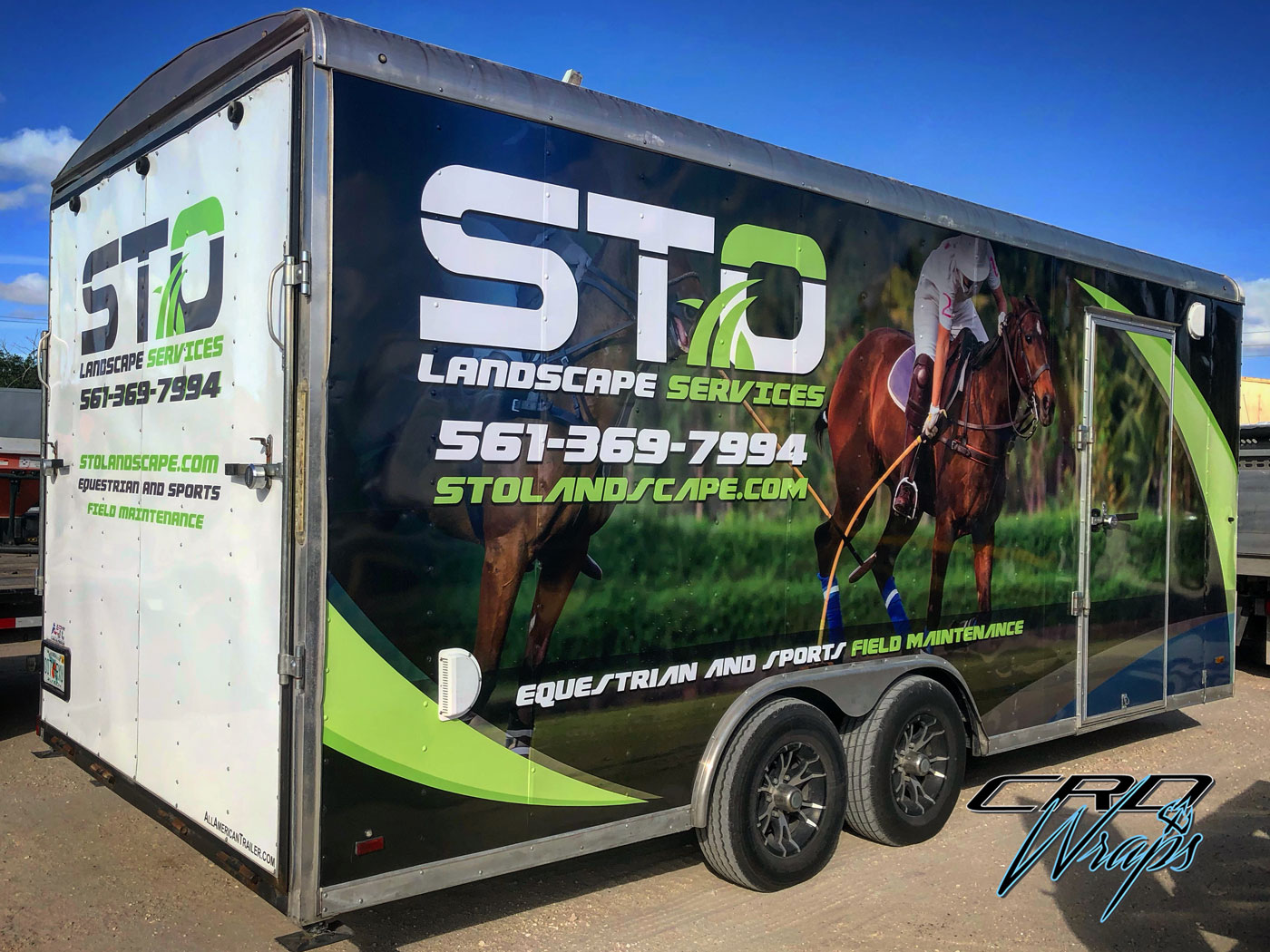
Landscape truck wraps in Palm Beach County need to do one job fast: make property owners, HOA managers, estate managers, and commercial property teams recognize who is on site. For landscape and pool service companies, a clean fleet wrap is not decoration. It is a trust signal that shows up in gated communities, commercial properties, estates, and neighborhoods every day.
Companies that are in touch with today’s markets are looking for a serious vehicle branding system that makes their company look organized, established, and easy to identify. This article breaks down what matters most: design strategy, fleet consistency, curb readability, wrap care, and the mistakes that make service vehicles harder to remember.
The Short Answer: Clean Fleet Branding Helps Property Owners and Managers Recognize the Company on Site
A landscape or pool service wrap should make the company instantly recognizable from the curb. The name, service category, and contact path should be clear without making someone study the vehicle.
That matters because service companies are constantly being judged in the field. A truck parked outside an HOA clubhouse, a pool van in a gated community, or a landscape trailer outside a commercial property is already representing the business before anyone speaks to the crew.
Consistent and professional branding across all service vehicles creates trust with current and potential customers. Customers prefer paying people they trust. The wrap should support that trust by making every truck, van, trailer, and equipment vehicle look like it belongs to the same disciplined company.
Why Landscape and Pool Fleets Need a Clean, Professional Design
Landscape and pool service companies operate in places where visibility compounds. Crews return to the same neighborhoods, estates, HOAs, and commercial properties every week. Neighbors notice. Property managers notice. Board members notice.
That repetition can either build confidence or create doubt.
A clean fleet design tells the market that the company is organized, established, and serious about the way it shows up. The truck does not have to explain every service line. It has to make the company recognizable and trustworthy.
The mistake is treating a service truck like a brochure. A truck moving through Palm Beach County traffic or parked along a property entrance does not have time to communicate everything. It has time to establish identity.
A strong landscape or pool service wrap should answer three questions quickly:
- Who are you?
- What do you do?
- How do they contact you?
Everything else is secondary.
Trucks, Trailers, Equipment Vehicles, and Service Vans: How to Keep Them Consistent
Most service fleets are mixed. A landscape company may have pickups, box trucks, enclosed trailers, dump trailers, mowers, maintenance vehicles, and specialty equipment. A pool service company may have service vans, pickups, compact route vehicles, and larger service trucks.
The goal is not to force every vehicle to look identical. The goal is to make every vehicle feel part of the same system.
That requires a design strategy before production starts. CRD Wraps handles design, printing/manufacturing, and installation in-house, which matters because fleet consistency depends on controlling the entire process from concept through final install.
Logo Placement
Your logo should appear in predictable places across each vehicle type. A pickup and an enclosed trailer may have different layouts, but the brand should not feel random from one asset to the next.
Color Discipline
A fleet should use a consistent color system. Making sure your chosen brand colors match across the company isn’t always as easy as pressing print. Keeping color codes consistent requires one dedicated team to maintain identical color codes from the first vehicle to the last.
Service Descriptor
“Landscape Maintenance,” “Commercial Grounds Care,” “Pool Service,” “Property Maintenance,” or another short descriptor should help the viewer understand the business immediately. This is especially important when the company name does not clearly state the service.
Contact Hierarchy
A phone number or website should be visible, but it should not overpower the brand. If the phone number is the biggest element on the vehicle, the design hierarchy is wrong.
Vehicle-to-Vehicle Adaptation
A trailer side, pickup door, box truck panel, and service van rear door all require different treatment. The system should adapt without losing identity.

What Should Be Readable From the Curb
For landscape and pool service truck wraps, curb readability is the standard.
A property owner should not have to walk up to the truck to understand the company. A manager should not have to pause and decode the side panel. A neighbor should be able to identify the company while passing by.
The priority should be:
- Company name.
- Core service.
- Phone or website.
- Strong visual identity.
Anything beyond that needs to earn its place.
Long lists of services work against the wrap. So do small icons, tiny certifications, oversized background images, complex patterns, excessive effects, and design elements that compete with the logo.
A good test is simple: stand back from the design proof. Shrink it down. Imagine it moving past you or parked behind landscaping, equipment, cones, or another vehicle. If the company name and service are not clear immediately, the design needs more discipline.
Why Over-Designed Graphics Hurt Service-Fleet Visibility
Over-designed wraps often come from good intentions. The business wants to show every service, every certification, every phone number, every social icon, and every visual idea at once.
The result is noise.
For landscape and pool companies, this is especially risky because the vehicles are often seen in visually busy environments: tropical landscaping, shaded driveways, parking lots, equipment staging areas, clubhouses, estate entrances, and commercial properties.
The wrap has to cut through that environment, not blend into it.
A better strategy is to build around one clear message. The brand should dominate. The service category should be unmistakable. Supporting details should be placed with restraint.
CRD Wraps’ perspective is simple: a commercial wrap should be designed as a business asset, not as a filled-space exercise. A serious wrap design depends on design hierarchy and fleet consistency. Those decisions separate an effective service-fleet wrap from one that gets ignored.

Care Expectations for Wrapped Work Trucks in South Florida
Landscape and pool service vehicles work hard. They deal with sun exposure, rain, humidity, road grime, grass clippings, fertilizer dust, pool chemicals, sprinklers, and job-site dirt.
A wrap can perform well in that environment, but care matters.
With premium materials and proper care, commercial wrap lifespan guidance is typically 3–5 years. Vertical panels usually last longer. Horizontal surfaces can wear faster, especially if neglected; in harsher conditions, horizontal areas may show issues much sooner than vertical panels.
For service fleets, the care standard should be practical:
- Wash vehicles when they appear dirty.
- Use non-abrasive soap, soft cloths, and clean water.
- Remove contaminants instead of letting them sit.
- Avoid rough scrubbing tools.
- Be careful around edges, seams, and high-impact areas.
For work trucks, the care mistake is assuming the wrap can be treated like exposed paint on a utility vehicle. It should be treated as brand equipment.
Real-World Example: STO Landscape Services


A useful example is the STO Landscape Services fleet project. The project involved a variety of vehicles and machinery that needed easily identifiable branding, and a seamless theme across the fleet. To keep the clutter out of the design, CRD Wraps chose specific service related images, and used different vehicles to represent each landscaping service they provided.
That is the right lesson for landscape and pool service fleets in Palm Beach County.
Not every vehicle needs the same coverage. A box truck or trailer may justify a full wrap. A pickup may need a strong partial wrap. A maintenance vehicle may only need clear lettering and a disciplined logo layout.
The system matters more than forcing the same treatment everywhere.
For a landscape or pool company serving HOAs, estates, and commercial properties, the fleet should look intentional whether one truck or six vehicles are on site. When the vehicles look connected, the company feels more reliable.
Local Relevance for Palm Beach County Service Fleets
Palm Beach County has the exact audience where fleet branding can work hard: gated communities, commercial properties, clubhouses, waterfront homes, country clubs, estates, retail centers, municipal properties, and HOA-managed neighborhoods.
Landscape and pool service companies are not hidden. Their crews are visible all day.
That visibility should be working.
A clean wrap or graphics can help a company become easily recognizable within a 15-mile service area. The goal is not just to be seen once. The goal is to be remembered after repeated exposure in the same local market.
For service businesses, that is where trust starts. A decision-maker may see the same wrapped truck three or four times before calling. A neighbor may notice a pool service van every week before asking who handles the property. A property manager may remember the fleet because it looked organized and consistent.
That is the point of landscape truck wraps in Palm Beach County: visibility with discipline.
FAQ
Yes, when the design is clear and consistent. The wrap should make the company easy to recognize in the neighborhoods, gated communities, HOAs, estates, and commercial properties where the crews already work.
Not exactly. Every vehicle should follow the same brand system, but the coverage and layout should adapt to the vehicle. A trailer, pickup, van, and box truck all need different design decisions.
It depends on the vehicle, budget, and role in the fleet. Full wraps create the strongest visual impact. Partial wraps work the same, while only using the strongest visual space. Decals and lettering can be effective for support vehicles when they follow the same brand standards.
With premium materials and proper care, most commercial wraps should be planned around a 3–5 year lifespan. Vertical panels typically hold up longer than horizontal surfaces, which requires more consistent care.
Trying to say too much. A service-fleet wrap should not list everything the company does. It should make the brand and core service easy to recognize from the curb.
Make the Fleet Do Its Part
Your crews are already visible. Your trucks, trailers, vans, and equipment vehicles are already being seen by property owners, HOA boards, estate managers, and commercial property decision-makers.
The question is whether the fleet is building trust or blending into the background.
For landscape truck wraps Palm Beach County companies can rely on, CRD Wraps builds fleet branding with strategy, clean design hierarchy, premium materials, and installation standards built for real work vehicles.
If your crews are already visible in high-value communities, make sure the fleet is doing its part.
Call CRD Wraps at (561) 315-1773 or request a quote to start planning a cleaner, more consistent service-fleet wrap system.