How to Rebrand a 50-Vehicle HVAC Fleet Without Disrupting Dispatch
A 50-vehicle HVAC fleet can be rebranded without taking the entire fleet out of service. The key is not speed alone; it is planning, design-file control, pre-manufacturing, staged scheduling, and disciplined installation.
For HVAC companies in Palm Beach County, every service van is a first impression before the technician ever reaches the door. This article explains how to approach commercial fleet wraps in Florida for HVAC companies in Palm Beach County when the company cannot afford confusion, inconsistent branding, or unnecessary downtime.
The Short Answer: HVAC Fleets Need Clarity, Consistency, and Durability
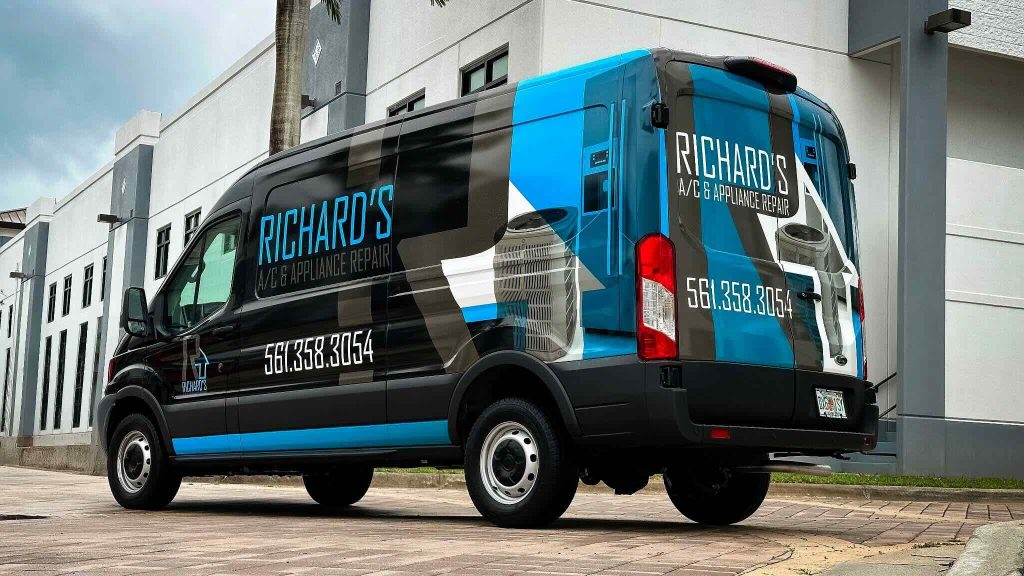
A strong HVAC fleet wrap should make three things clear within seconds: who you are, what you do, and how to contact you.
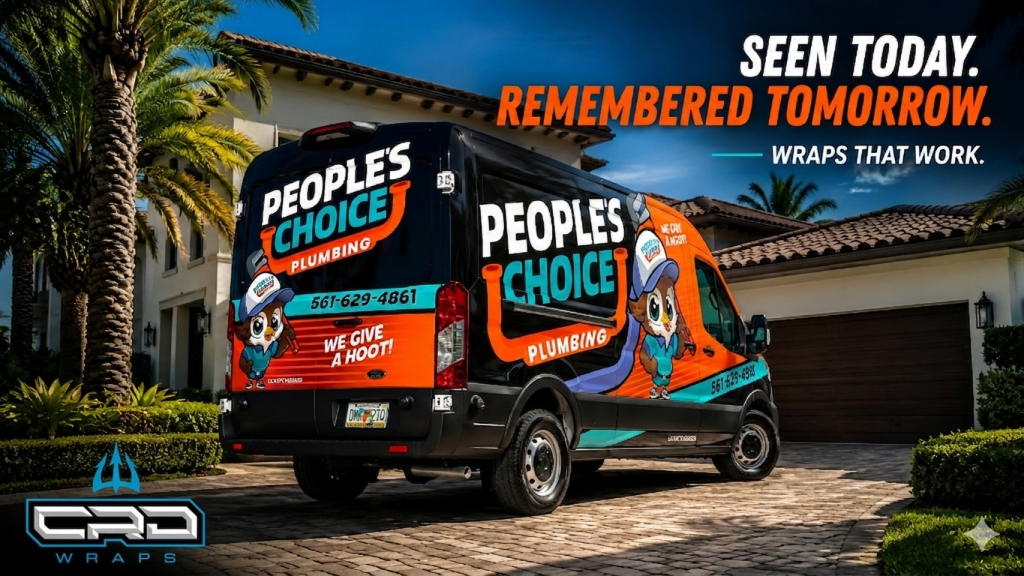
That matters because HVAC vehicles are moving through neighborhoods, gated communities, commercial plazas, job sites, and high-traffic roads every day. Your fleet is not just transportation. It is a local brand system.
For a 50-vehicle rebrand, the goal is to create a repeatable wrap program, not 50 separate design projects. The first van should establish the standard. The fiftieth vehicle should still look like it belongs to the same company.
At CRD Wraps, that means controlling the process from design to printing/manufacturing to installation in-house. It also means using premium 3M and Avery Dennison materials, cast laminate on all printed wraps, and installation by 3M Preferred Installers.
Why HVAC Vehicles Are Different From Ordinary Business Vehicles
HVAC fleets have a specific job to do visually.
Most HVAC vehicles are seen quickly: passing on Southern Boulevard, parked outside a customer’s home in Wellington, staged near a commercial property in Boca Raton, or moving between calls in West Palm Beach. The wrap has to work while the vehicle is moving, parked, dirty from a job site, or surrounded by other service vehicles.
That changes the design rules.
An HVAC wrap cannot be overloaded with every service line, financing message, icon, certification, coupon, badge, and brand promise. Too much information makes the vehicle harder to understand. The better approach is disciplined hierarchy:
What the wrap must communicate first
Company name. HVAC service category. Phone number or web address. Brand color. Service credibility.
Everything else is secondary.
Emergency service, maintenance plans, indoor air quality, duct cleaning, financing, or installation offers can weaken the main read. A fleet wrap is not a brochure. It is a moving brand impression.
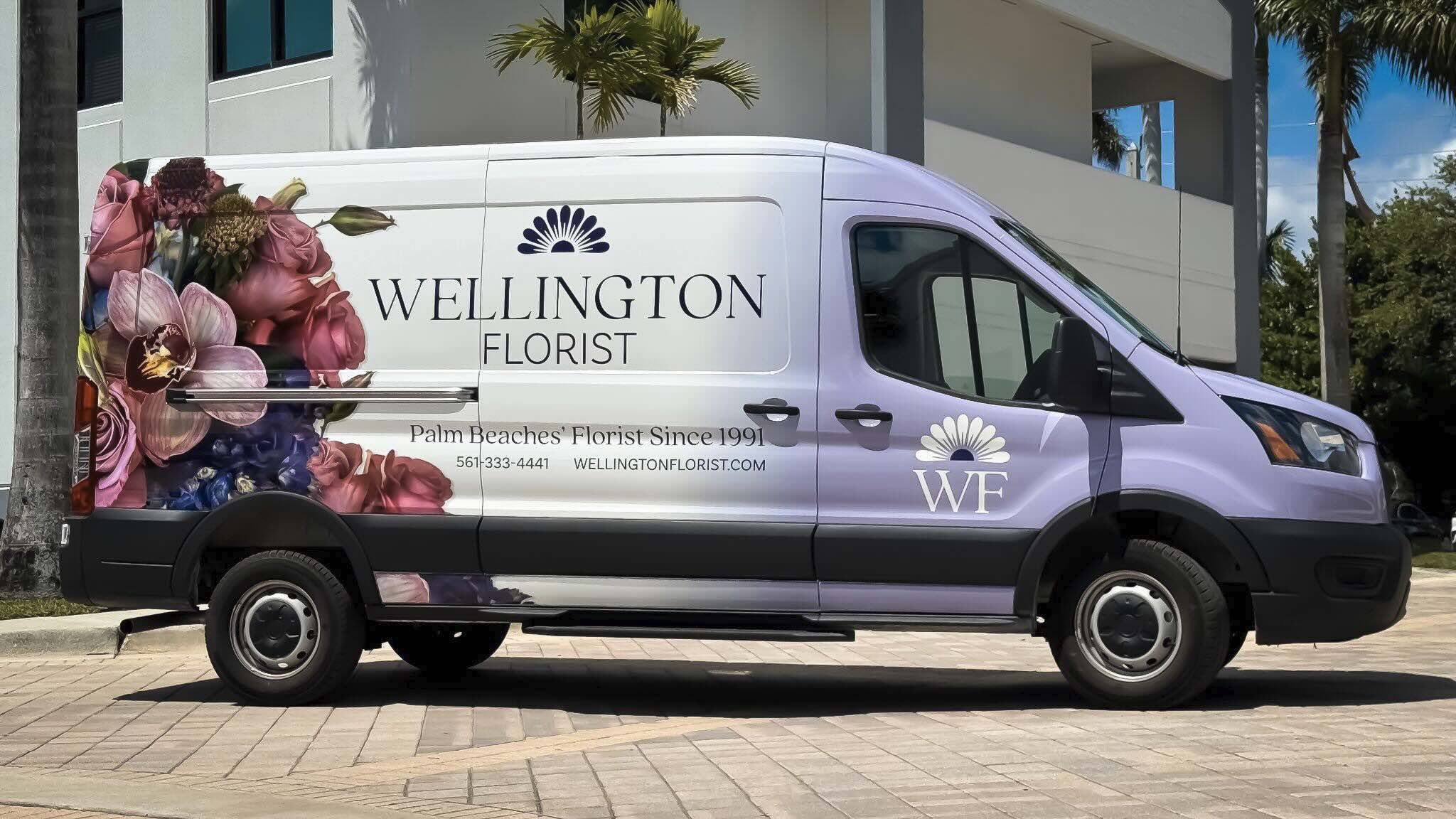
What a Strong HVAC Fleet Wrap Must Communicate in Three Seconds
“If someone cannot identify the company and understand the service while the van is moving, the wrap is working against the business.”
This is especially important for large operators with multiple crews on the road across Palm Beach County.
A strong HVAC fleet wrap usually needs:
1. A dominant brand mark
The company name or logo should not compete with background graphics. If the logo is not instantly readable, the design needs to be simplified.
2. A clear service category
“Air Conditioning,” “Heating & Cooling,” “HVAC Service,” or a similar service descriptor should be visible without effort. Many homeowners do not remember the company name first. They remember the category.
3. A contact path that fits the hierarchy
Phone numbers, URLs, or QR codes need to be sized and placed without competing with your brand. Make sure they know who you are FIRST and then let the search engines do the rest.
4. Consistent fleet recognition
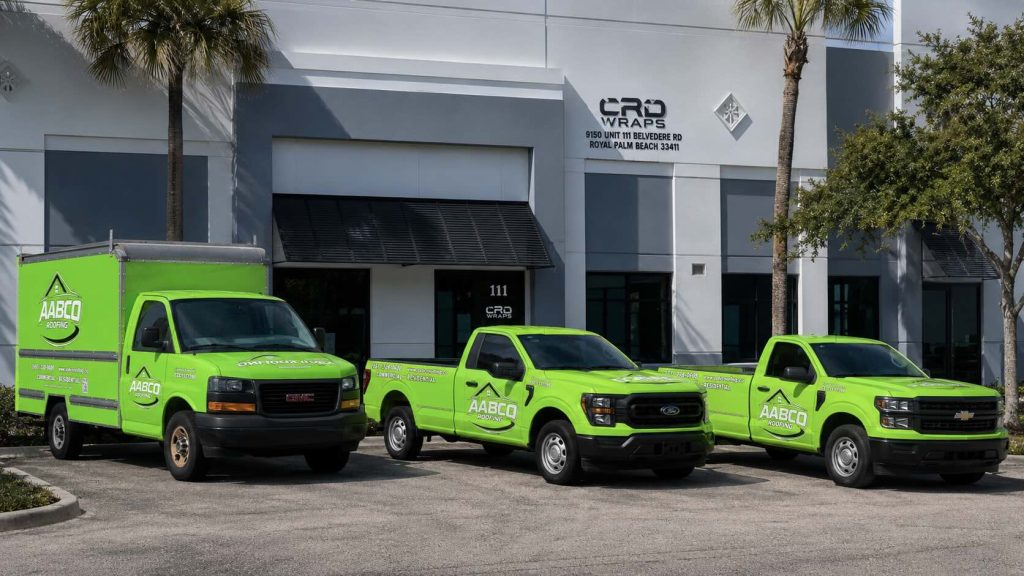
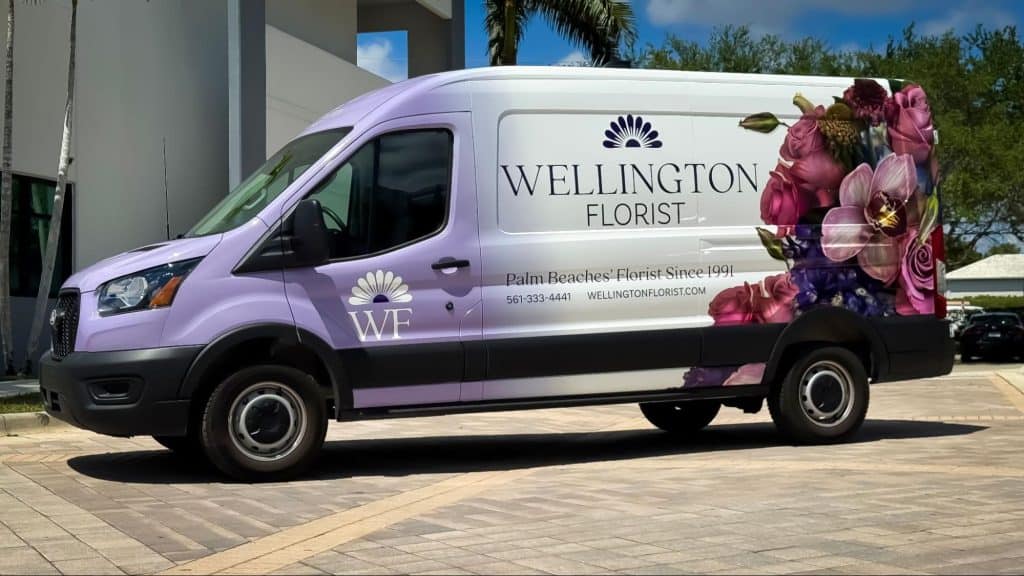
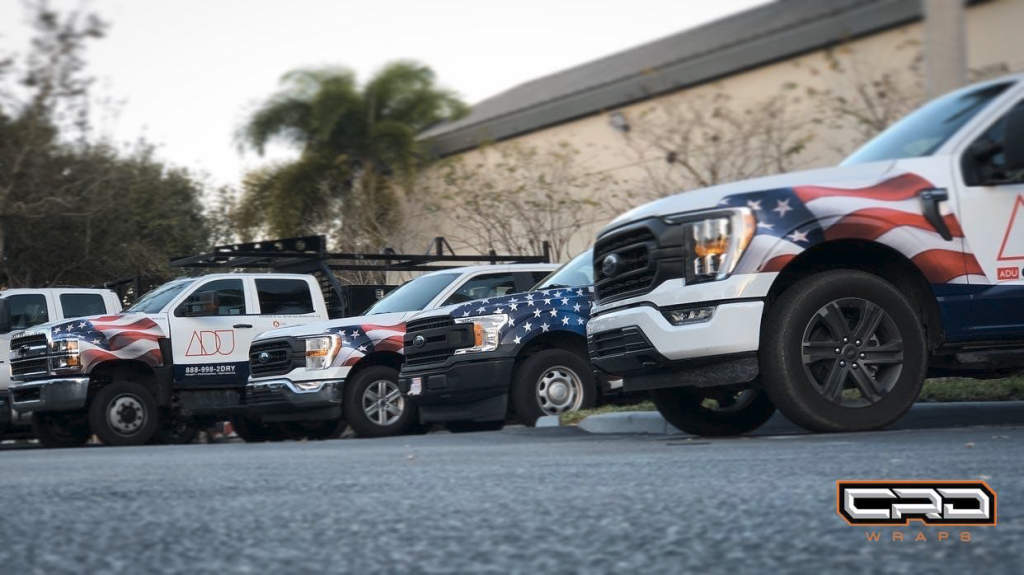
A customer should recognize the same brand whether the vehicle is a Transit van, Sprinter, pickup, box truck, trailer, or specialty utility van. Consistency builds trust before the appointment starts.
CRD Wraps standard is simple: we do not judge a fleet wrap by how vehicle number one looks in the shop. We judge it by whether vehicle number forty-seven still matches the system.
Full Wrap, Partial Wrap, or Spot Graphics for HVAC Fleets?
Not every HVAC vehicle needs the same level of coverage.
A full wrap gives the strongest visual impact and is often the right choice for high-visibility service vans, box trucks, and flagship vehicles. It allows the brand to control the entire exterior presentation.
A partial wrap can be a strong option when the existing vehicle color supports the brand. It can create a clean, professional look while focusing coverage on the most visible panels.
Spot graphics work well for simpler branding needs: logos, licensing information, phone numbers, unit numbers, DOT information, or door graphics. They are also useful for adding new vehicles into an existing fleet system.
The right answer depends on the brand, vehicle color, fleet mix, budget range, and rollout plan.
For HVAC companies, the mistake is assuming one layout automatically fits every vehicle. A box truck, cargo van, and pickup have different body lines, panel breaks, handles, windows, and usable advertising space.
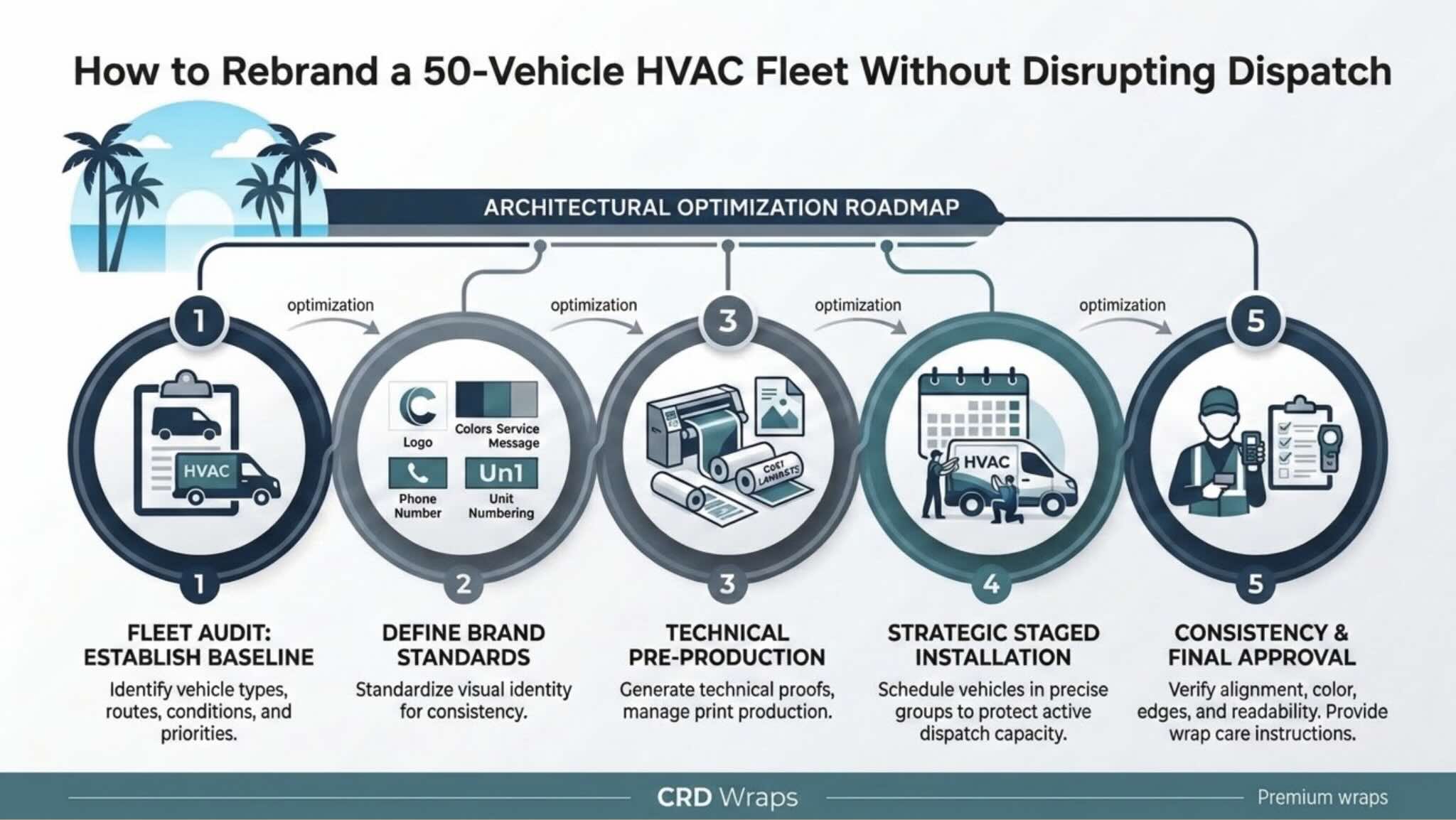
Scheduling a Multi-Vehicle Rollout Without Hurting Dispatch
One of the biggest myths about fleet rebranding is that all vehicles need to be out of commission for extended periods.
They do not.
CRD Wraps uses software and internal processes that allow most commercial wraps to be pre-manufactured without needing the vehicle in person first. That means graphics or wraps can often be prepared ahead of time, then installed during a scheduled window.
Depending on size and complexity, decals may turn around in as little as a few hours to a day. Most commercial wraps commonly require a two- to three-day install window. Specialty equipment may need a site survey to verify measurements, panel conditions, and installation requirements before production.
For a 50-vehicle HVAC fleet, the rollout should be staged. That might mean scheduling vehicles by vehicle type, condition, or priority. A company may start with the most visible vans, the oldest branding, or the vehicles assigned to high-value neighborhoods and commercial accounts.
The point is control. Dispatch keeps moving while the brand system gets upgraded in planned phases.
CRD Wraps Standard: Brand Files, Premium Materials, Cast Laminate, and Clean Installation
“A serious fleet rebrand starts before the first panel is printed.”
CRD Wraps looks at the fleet as a system. That includes logo files, color codes, fonts, branding elements and vehicle types.
Design-file control matters because inconsistency compounds across a fleet. One wrong logo, one incorrect color, one misplaced information, can create problems across multiple vehicles.
Material selection matters just as much. CRD Wraps uses 3M and Avery Dennison materials, with cast laminate on all printed wraps. For commercial fleet wraps, expected lifespan is typically 3–5 years with premium materials and proper care. Vertical panels usually last longer. Horizontal surfaces, such as hoods and roofs, are exposed to harsher UV and heat; if neglected, they can fail in about a year, while consistent care may extend them closer to 2–3 years.
Installation quality is the final checkpoint. Edges, seams, curves, door handles, recessed areas, panel alignment, and post-install inspection all affect how the wrap performs in the real world.
Mistakes HVAC Companies Make With Fleet Graphics
“The most common mistake is treating a fleet wrap as artwork instead of a business asset.”
A beautiful design that cannot be read at speed is not doing its job. A wrap that looks good on one van but cannot scale to 50 vehicles is not a fleet system.
HVAC companies should avoid:
- Overloading the vehicle with multiple services
- Not following brand hierarchy
- Applying the same layout to every vehicle body style without adjustment
- Ignoring prep; Clean vehicles, Clean Brand
- Mixing materials and vendors across the same fleet
- Treating maintenance as optional after installation
The best wrap programs are planned like an operational rollout, not a one-time graphics order.
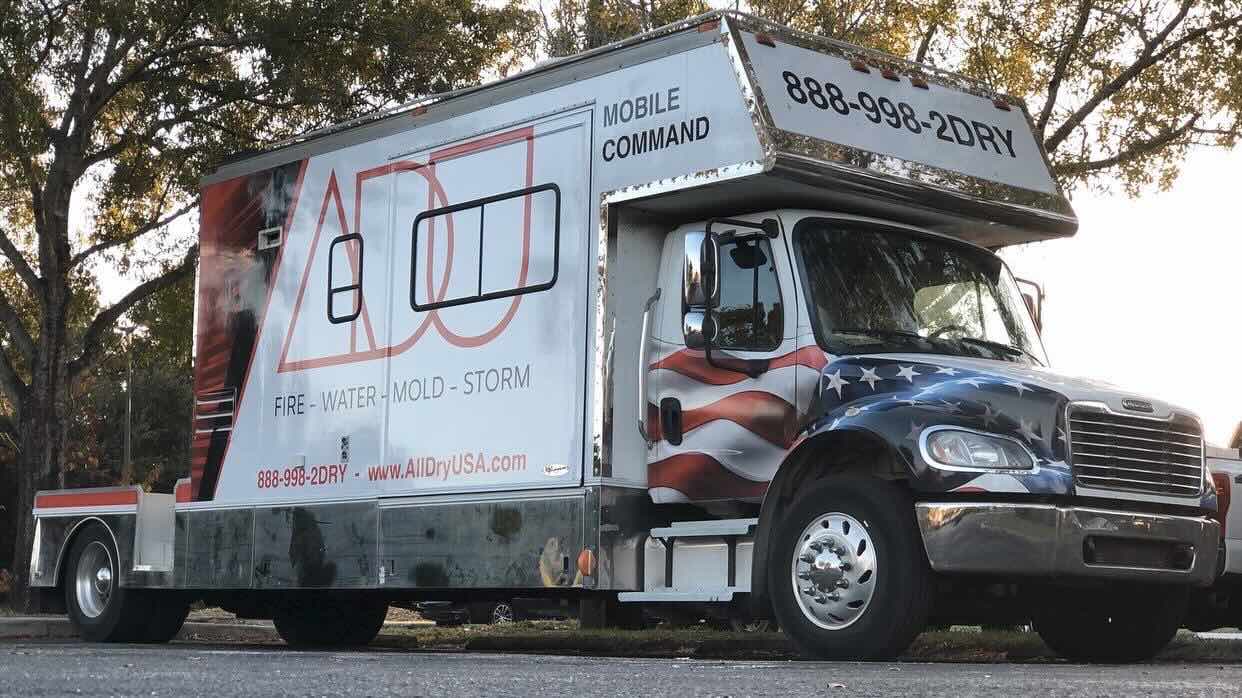
Real-World Example: Tight Schedule, Multiple Vehicle Types, One Consistent Look
CRD Wraps Mobile Command fleet project is not an HVAC project, but the operational lesson is directly relevant.
The client operated a disaster response team, with vehicles of different shapes, sizes, and functions. The challenge was not just wrapping one truck. It was keeping the fleet identifiable, consistent, and ready for use under a tight schedule.
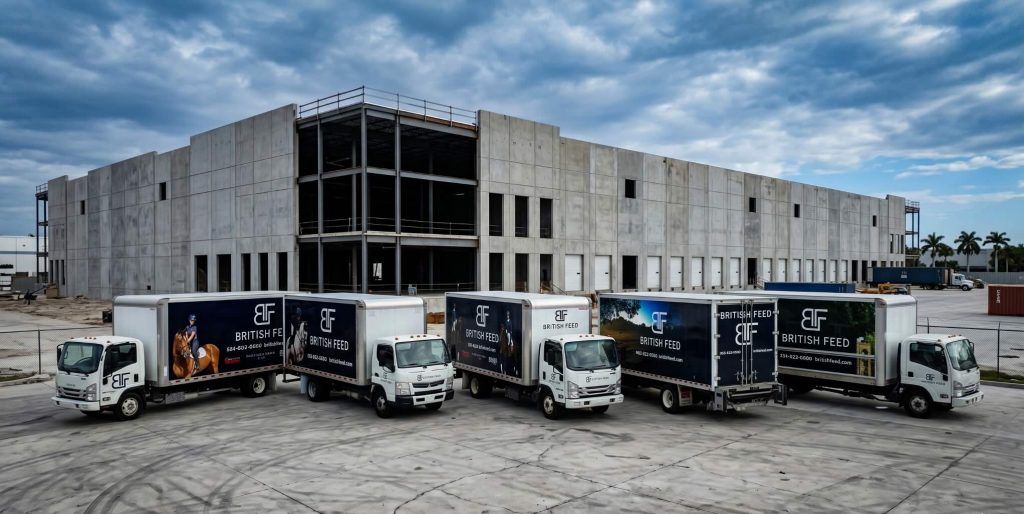
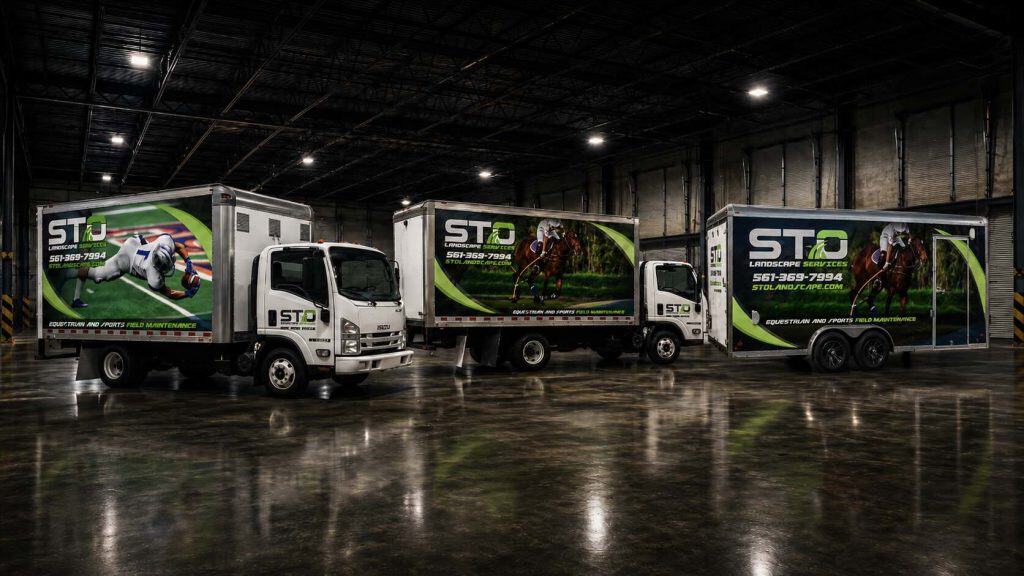
That is the same kind of thinking a Palm Beach County HVAC company needs during a rebrand. A service fleet may include vans, pickups, box trucks, trailers, and specialty equipment. Each vehicle has a different layout challenge, but the customer should see one brand.
For HVAC, that consistency matters when crews are moving from West Palm Beach to Boca Raton, from residential calls to commercial service accounts, and from routine maintenance to emergency calls.
Local Relevance for Palm Beach County HVAC Companies
“Palm Beach County is a visibility market.”
HVAC companies are constantly seen in neighborhoods, condo communities, commercial corridors, schools, medical offices, marinas, and construction sites. In this environment, a fleet wrap does not need to shout. It needs to be clear, consistent, and easy to recognize.
South Florida conditions also make material choice and wrap care important. Heat, sun exposure, humidity, frequent rain, and daily road use all test the wrap over time. Premium materials, cast laminate, proper prep, clean installation, and routine maintenance are what help the fleet keep representing the company properly.
FAQs
How long does it take to rebrand a 50-vehicle HVAC fleet?
It depends on the vehicle mix, wrap coverage, condition of the vehicles, and scheduling requirements. Many graphics can be pre-manufactured, which helps reduce downtime. Decals may take a few hours to a day per vehicle, while most wraps commonly require two to three days.
Do all vehicles need to come in at the same time?
No. A staged rollout is usually the better approach. Vehicles can be scheduled by priority, route, vehicle type, or dispatch availability so the HVAC company keeps operating.
Should an HVAC fleet use full wraps or partial wraps?
Full wraps can create a strong brand presence, but partial wraps and spot graphics will perform just as well when the design is disciplined and clean. The right choice depends on the fleet, the brand system, and how each vehicle is used.
Can CRD Wraps wrap different vehicle types in the same fleet?
Yes. CRD Wraps can build a fleet wrap system across vans, pickups, box trucks, trailers, and specialty vehicles. Adapting the design to each vehicle while keeping the brand consistent is our priority.
What makes a commercial fleet wrap last longer?
Material selection, cast laminate, surface prep, installation quality, parking conditions, cleaning habits, and sun exposure all matter. With premium materials and proper care, commercial fleet wraps are generally expected to last 3–5 years.
Ready to Rebrand Your HVAC Fleet Without Disrupting Dispatch?
A 50-vehicle fleet rebrand should not create chaos for the people answering phones, routing technicians, and keeping customers comfortable.
CRD Wraps helps companies build commercial fleet wrap systems with controlled design, in-house production, premium materials, and installation standards built for real service fleets.
“Bring CRD Wraps one van, one box truck, or the whole HVAC fleet. We’ll help you build a wrap system that looks consistent from West Palm Beach to Boca Raton.”