Health Care District of Palm Beach County: How CRD Wraps Maintains Brand Consistency Across an Expanding Commercial Fleet
Adding Ford Transit vans to an established fleet without losing the graphic standard the organization already had. Four vehicles contracted, three completed, one queued — and not one of them identical.
- Client
- Health Care District of Palm Beach County
- Project Type
- Established fleet expansion
- Market
- Palm Beach County, Florida
- Contracted Vehicles
- 4 Ford Transit cargo vans
- Original Color
- White
- Coverage
- Exterior coverage with partial bulkhead coverage
- Artwork
- Customer-supplied fleet artwork and brand standards
- CRD Wraps Scope
- Artwork preparation, printing, lamination and installation
- Print Film
- Avery Dennison MPI 1105 premium cast
- Laminate
- Avery Dennison DOL 1360Z gloss optically clear
- Primary Objective
- Add vehicles while maintaining established fleet-brand consistency
- Completed to Date
- 3 of 4
- Average Downtime
- ~2–3 days
The Short Version
Who completed the fleet graphics?
CRD Wraps, in Royal Palm Beach, Florida, serving Palm Beach County.
Who was the client?
The Health Care District of Palm Beach County.
How many vehicles are involved?
Four Ford Transit cargo vans are currently contracted. Three have been completed and one is queued.
Were all of the vehicles identical?
No. The fleet includes low- and medium-roof Transit vans with 129.9-inch and 148-inch wheelbases across model years 2018 through 2026.
Who designed the graphics?
The Health Care District of Palm Beach County supplied the established design and brand standards. CRD Wraps prepared the files for large-format production and handled printing, lamination and installation.
What material was used?
Avery Dennison MPI 1105 premium cast vehicle wrap film with DOL 1360Z gloss optically clear overlaminate.
How long was each vehicle out of service?
Approximately two to three days.
Maintaining Brand Consistency as an Established Fleet Grows
Adding another vehicle to an established fleet sounds straightforward. Use the same logo, use the same colors, print the graphics, install them. In practice, fleet consistency is much more complicated.
Different model years, wheelbases and roof heights change the available graphic space. Artwork has to be scaled correctly. Logo placement has to stay visually consistent. Colors need to reproduce predictably. Files that work for one vehicle may not work for another. And for an organization managing an active fleet, every vehicle also has a job to do.
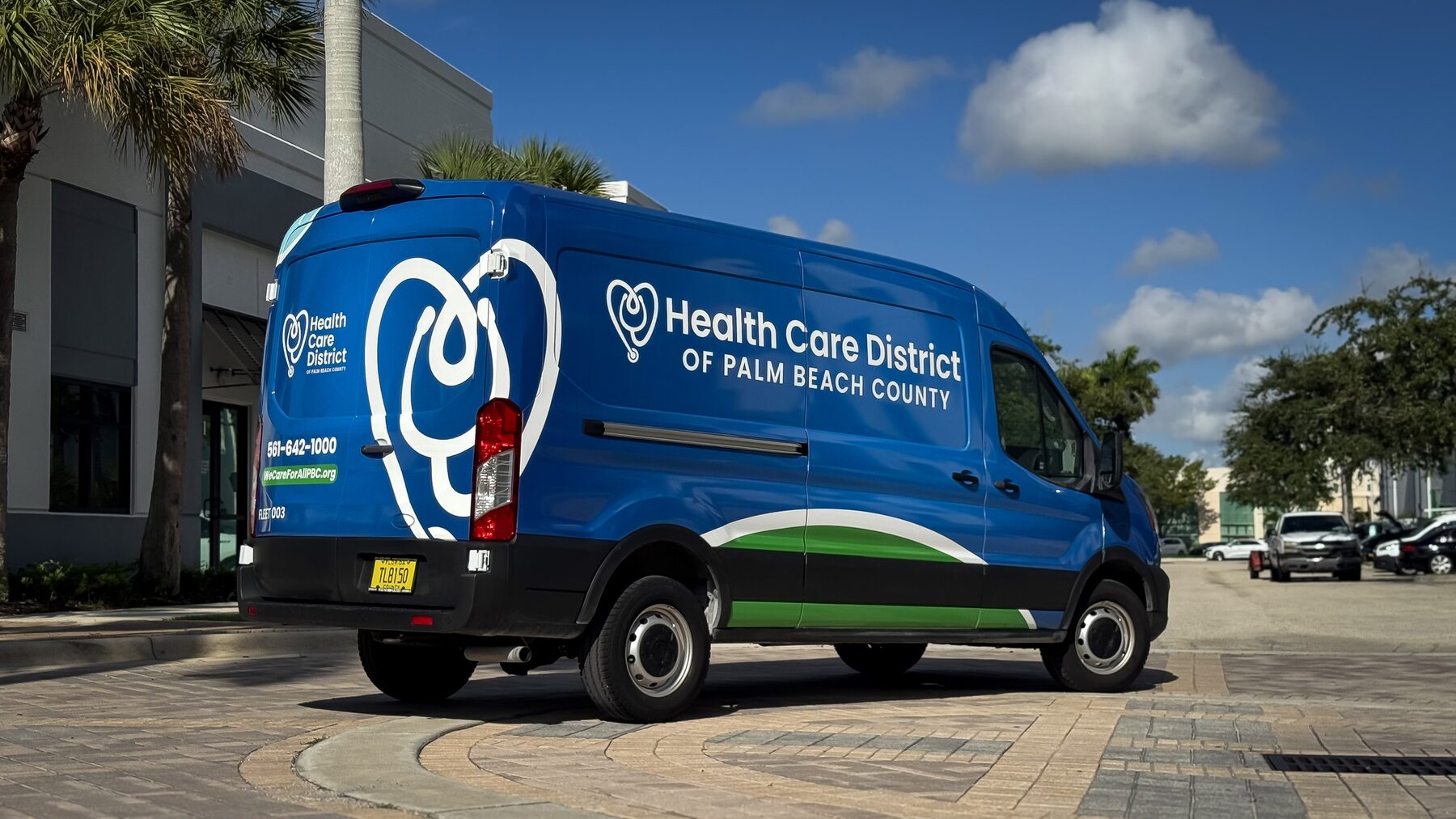
When the Health Care District of Palm Beach County added new Ford Transit vans to its existing fleet, CRD Wraps was contracted to produce and install graphics for four vehicles while staying true to artwork and brand standards supplied by the Health Care District — the same discipline behind every commercial fleet wrap in Palm Beach County we produce. The objective wasn’t to redesign the brand. It was to reproduce it correctly.
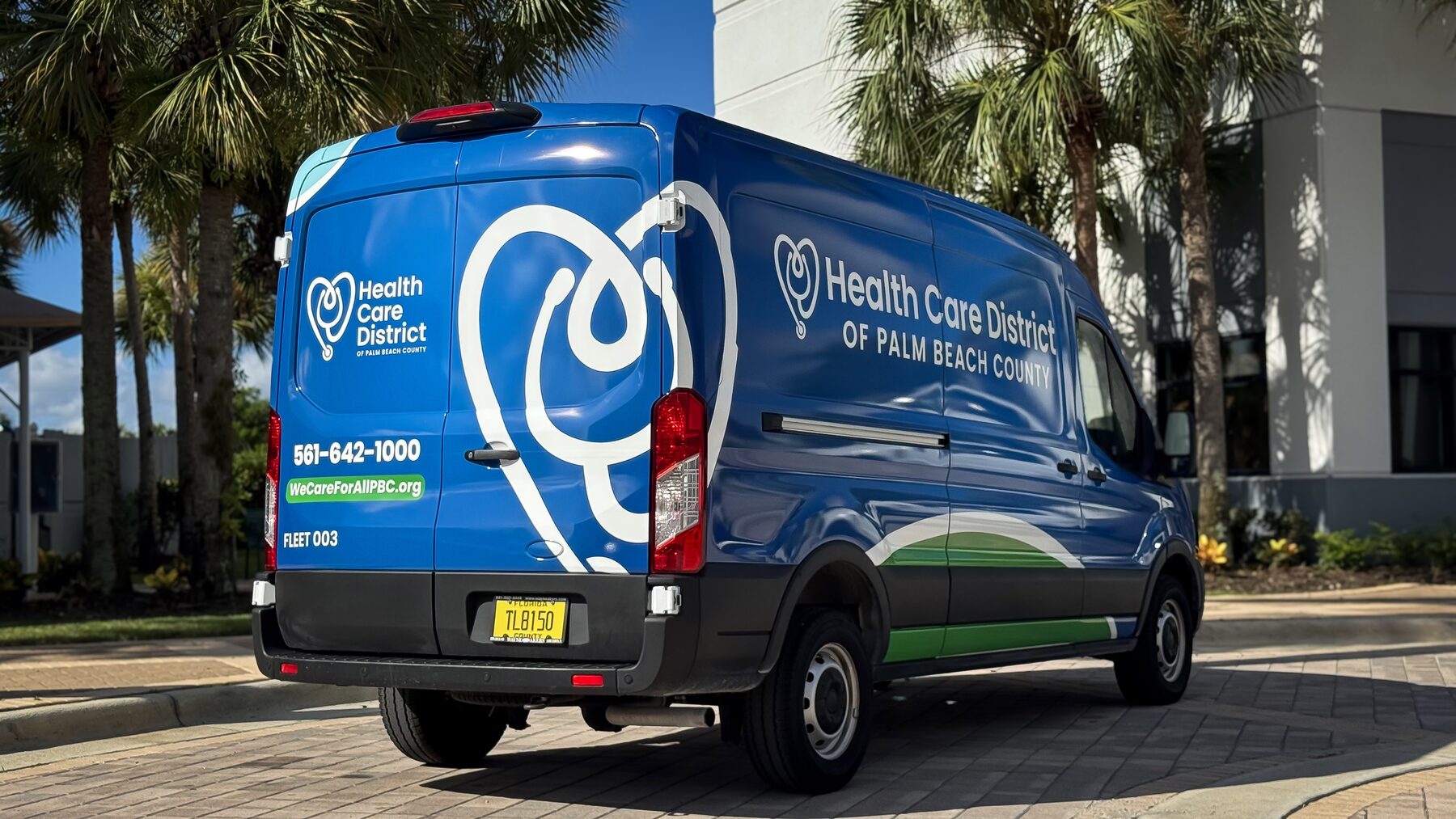
The Next Vehicle Has to Look Like It Was Always Part of the Fleet
For an established organization, fleet branding is rarely about creating something new every time another vehicle is purchased. The challenge is the opposite: nothing should unexpectedly change.
The logo shouldn’t move simply because the next van is taller. The proportions shouldn’t feel different because a vehicle has a longer wheelbase. The colors shouldn’t shift because the graphics were produced at a different time. And an installer shouldn’t reinterpret an established design just because the vehicle body is different.
When several branded vehicles are parked together, those inconsistencies become obvious. An effective fleet graphics program requires more than possession of a logo file. It requires a repeatable production standard.
What most people assume
“Same logo, same colors — just print it again.”
What the fleet needs
“Same relationships, adapted correctly to a different body.”
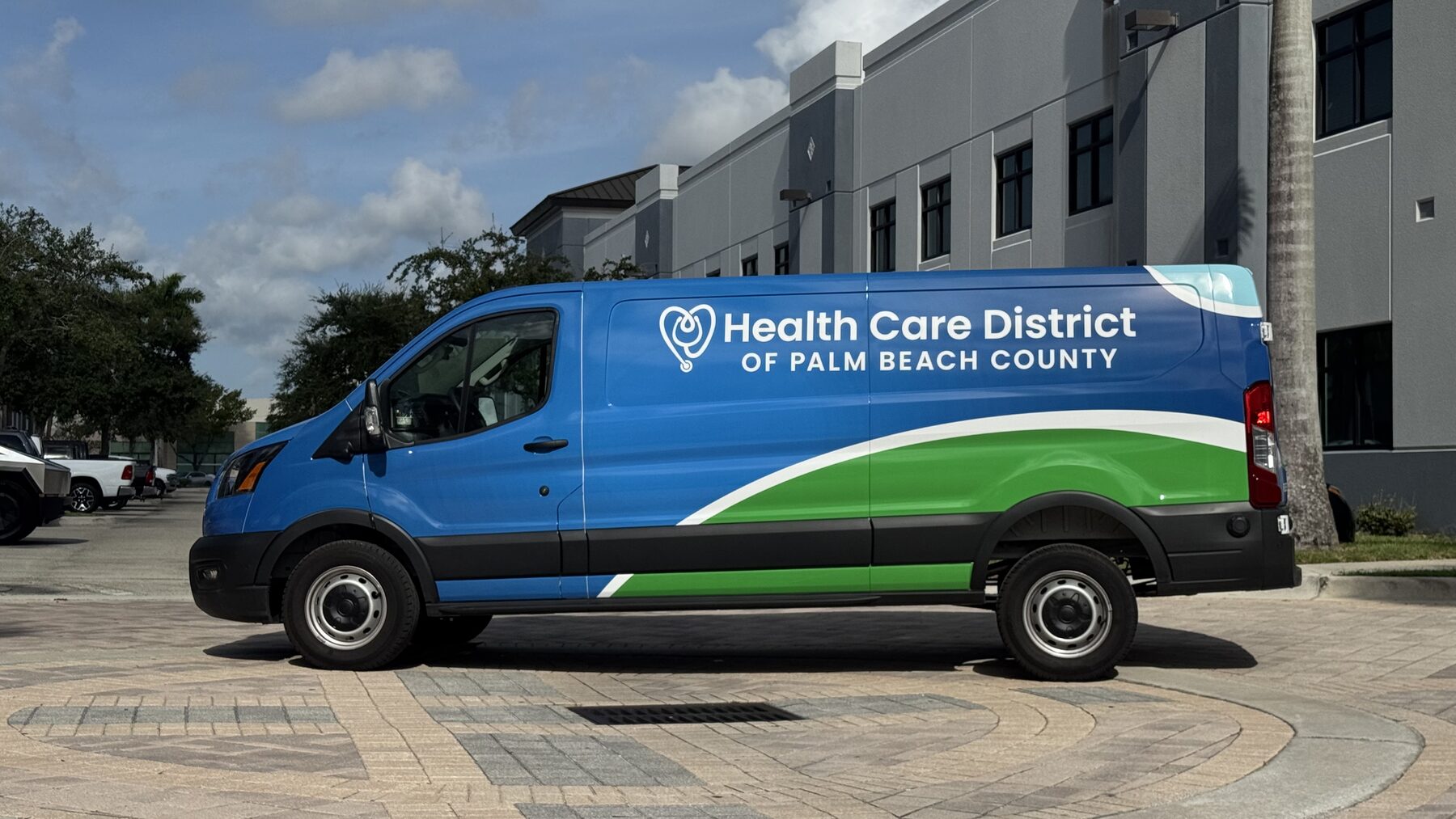
Four Ford Transits — But Not Four Identical Vehicles
Although all four vehicles in this project are Ford Transit cargo vans, they don’t share one identical configuration. The fleet includes:
- 2018 Ford Transit Cargo Van — low roof, 129.9-inch wheelbase
- 2024 Ford Transit Cargo Van — medium roof, 148-inch wheelbase
- 2026 Ford Transit Cargo Van — low roof, 148-inch wheelbase
- 2026 Ford Transit Cargo Van — low roof, 129.9-inch wheelbase (queued)
A graphic layout developed for one van cannot simply be sent to print and applied unchanged to another. The visual identity has to stay consistent while the artwork is adapted to different amounts of usable body space.
The goal was not pixel-for-pixel duplication. It was visual consistency — the name, logo, color relationships, graphic elements and supporting information holding the placement, scale and character established by the organization’s lead graphic designer, even when the vehicle underneath them changed.
Good Fleet Production Starts Before Anything Is Printed
The Health Care District of Palm Beach County supplied the design direction, completed artwork and established brand standards. CRD Wraps’ responsibility was to translate those files into reliable large-format production — which required ongoing communication with the Health Care District’s lead designer.
For each specific Transit configuration, the artwork had to arrive at the correct scale and on the correct vehicle template. Four things had to be right before anything went to print:
- File format
- Scale
- Vehicle configuration
- Placement
Those conversations happened before production, because discovering an artwork problem after a 148-inch-wheelbase Transit has already been printed is an expensive way to find it. CRD Wraps prepared the supplied files for large-format output while preserving the creative direction established by the Health Care District.
That distinction matters: CRD Wraps was not redesigning the organization’s identity. CRD Wraps was protecting it through production.
Consistency Does Not Mean Forcing One Template Onto Every Vehicle
A common misconception in fleet graphics is that consistency means putting every element in precisely the same numerical location. It doesn’t. A medium-roof Transit and a low-roof Transit do not present the same canvas. Neither do a 129.9-inch wheelbase and a 148-inch wheelbase. Trying to force one layout onto all four vehicles could actually make the fleet look less consistent.
Instead, the important relationships need to stay recognizable:
- Logo prominence and organization-name scale
- Color balance and graphic direction
- Supporting information and rear identification
- Overall visual hierarchy
The dimensions may change. The brand should not. That is the production standard CRD Wraps worked to preserve.
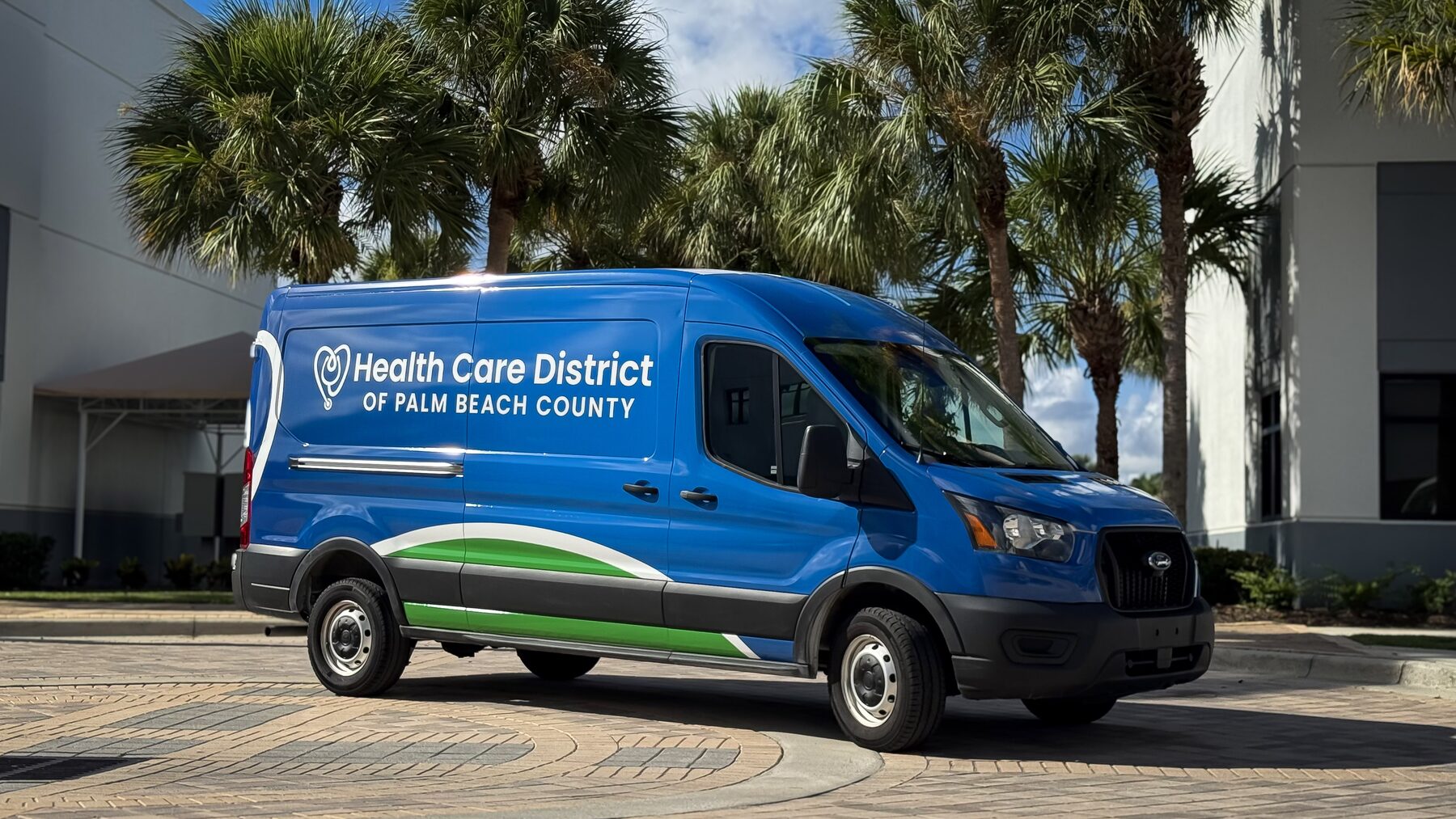
Building Repeatability Into the Physical Graphics
Once the artwork for each vehicle was prepared and approved for production, CRD Wraps printed the graphics on Avery Dennison MPI 1105 Premium Cast Vehicle Wrap Film and protected them with Avery Dennison DOL 1360Z Gloss Optically Clear Overlaminate.
Using a consistent print-film and laminate system across the program removes another variable from fleet production. That matters when vehicles are added over time rather than wrapped simultaneously.
The objective is for a vehicle produced later to visually belong beside the vehicle that came before it. CRD Wraps handles printing, lamination and installation in-house so those production variables stay inside one workflow.
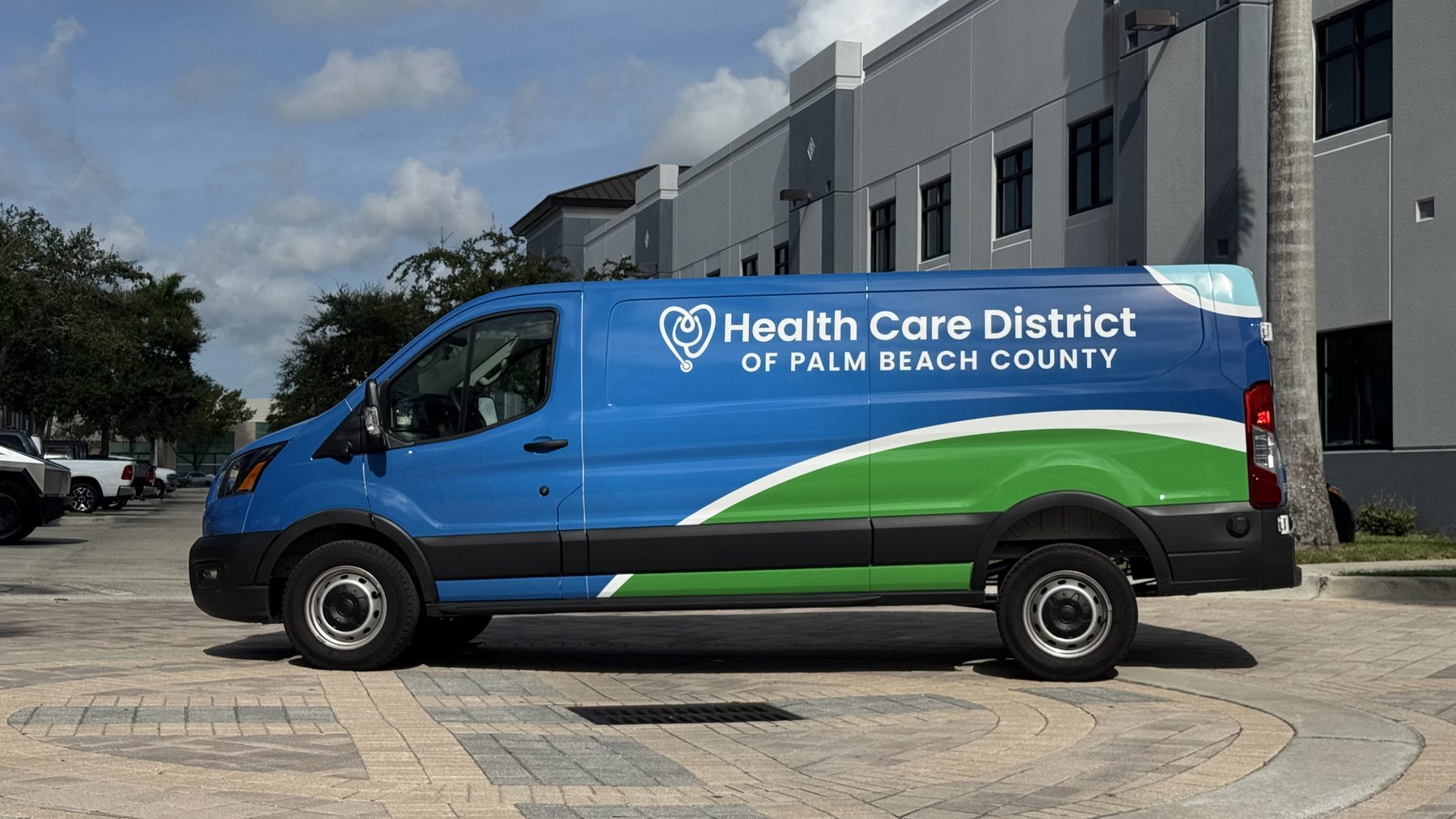
Repeatability Still Requires Skilled Installation
A consistent print file is only part of a consistent fleet. The installation has to preserve the intended placement of the design.
On a large commercial van, small alignment differences become very noticeable across large panels, doors and body transitions. CRD Wraps therefore treated placement and scale as part of the fleet standard — not as installation decisions made vehicle by vehicle.
Graphics were positioned to stay faithful to the Health Care District’s established design while being adapted appropriately for the specific Transit configuration being installed. The result is a series of vehicles that share one visual identity even though their physical dimensions are not identical.
Fleet Graphics Have to Work Around Fleet Operations
A commercial fleet exists to perform a job. Every day a vehicle is unavailable has an operational consequence. For the Health Care District project, completed vehicles have typically stayed out of service for approximately two to three days for the CRD Wraps production and installation process.
The individual vehicle workflow lets the fleet expand without requiring multiple vehicles to be removed from service at the same time. For fleet managers, that is an important part of choosing a graphics provider. The finished wrap matters — so does the process required to get there.
Prepress, Before Drop-Off
Supplied artwork checked against the exact roof height, wheelbase and model year, then prepared for large-format output with the designer.
Before the van arrivesPrint & Laminate
Graphics printed on MPI 1105 and laminated with DOL 1360Z in-house, so color and finish match the vehicles already on the road.
In-houseInstall & Return to Service
One vehicle at a time, installed to the established placement standard and released back to the fleet.
~ 2–3 daysThree Vehicles Completed. A Fourth Ready to Join the Same System.
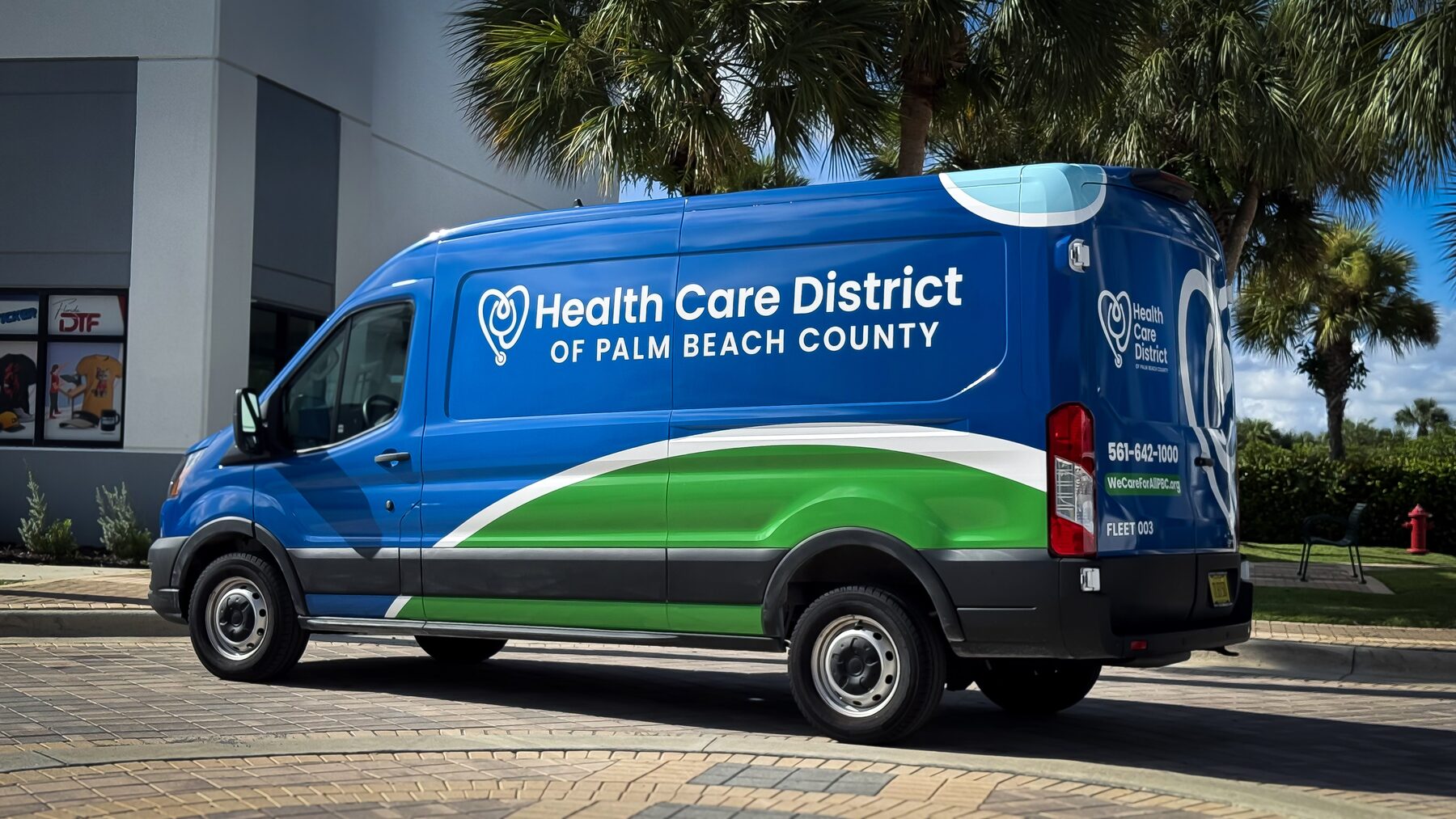
CRD Wraps has completed three of the four Ford Transit vans contracted as part of this program. The fourth — a 2026 Ford Transit low roof with a 129.9-inch wheelbase — is queued for drop-off and installation.
The measure of success isn’t whether someone can identify which vehicle was wrapped first. Ideally, they can’t.
Although the fleet includes different model years and configurations, the completed vehicles maintain the Health Care District of Palm Beach County’s established visual identity. People don’t see four wrap projects. They simply see Health Care District of Palm Beach County.
Five Things That Keep a Growing Fleet Looking Like One Fleet
None of these are specific to health care, or to Ford Transits. They apply to any organization that will buy another vehicle at some point.
Decisions about scale, placement, materials and production shouldn’t be reinvented every time another vehicle arrives. The first successful production standard should inform the next.
“Ford Transit” isn’t enough information. Roof height, wheelbase, model year and body configuration all change how graphics fit.
Receiving artwork doesn’t eliminate the production process. Files still need checking for template, scale, resolution, format, placement and vehicle configuration.
Different vehicles may require different dimensions. Maintain the recognizable relationships between brand elements rather than duplicating measurements that no longer fit.
Production scheduling, artwork preparation and installation should work around how the vehicles are actually used.
Usually Before the Inconsistencies Start Showing Up
If your company has multiple vehicles — or expects to add more — the moment to set the standard is before the fleet begins to drift. Common warning signs:
- Logos placed differently from vehicle to vehicle
- Colors that no longer match
- Different versions of the same branding in circulation
- Phone numbers or URLs appearing in different locations
- Multiple wrap providers interpreting the artwork differently
- Missing production files for older vehicles
- New vehicle types that don’t fit the old layout
- Excessive downtime every time another vehicle is added
At that point, the issue is no longer just graphic design. It is fleet management — and it is what a fleet branding program is supposed to prevent.
One Identity, Four Configurations
You Don’t Need a New Design. You Need the Existing One Reproduced Correctly.
CRD Wraps works with organizations and commercial fleets throughout Palm Beach County that already have established branding and need new vehicles brought in without losing consistency.
Talk to a Designer →The Newest Vehicle Should Look Like It Has Always Belonged There.
CRD Wraps can work with your internal marketing department, outside agency or lead designer to prepare supplied artwork for vehicle-specific production, manufacture the graphics in-house and install each vehicle as it enters the fleet.
Request a Fleet Wrap Quote →Fleet Graphics FAQ
Can CRD Wraps work from artwork our own designer or agency created?
Yes. On this project the Health Care District supplied the completed artwork and brand standards, and CRD Wraps prepared those files for large-format output on each specific vehicle. Receiving artwork doesn’t remove the prepress step — files still need to be checked for template, scale, resolution, format and placement against the exact vehicle.
Will graphics look the same on a low-roof and a medium-roof van?
They should read the same, but they won’t be dimensionally identical. A medium-roof Transit and a low-roof Transit don’t present the same canvas, so the layout is adapted while the logo prominence, name scale, color balance and hierarchy stay recognizable across the fleet.
What information do you need before quoting a fleet vehicle?
Year, make, model, roof height, wheelbase and body configuration, plus whether established artwork already exists and who manages the brand files. “Ford Transit” on its own isn’t enough — the configuration changes how the graphics fit.
How long is each van out of service?
Approximately two to three days per vehicle on this program. Vehicles come through individually, so the fleet doesn’t lose several units at once.
Can you match vehicles that were wrapped years ago?
Usually yes, and this is exactly why a documented production standard matters. Consistent film and laminate across the program, plus recorded placement and scale, are what let a van produced in 2026 sit beside one produced in 2018 without looking like a different program.
Do you handle printing and installation in-house?
Yes. CRD Wraps handles artwork preparation, printing, lamination and installation in-house in Royal Palm Beach, which keeps the production variables inside one workflow as vehicles are added over time.
Request a Fleet Wrap Quote
Tell CRD Wraps how many vehicles are currently in your fleet, which vehicles are being added, their years, makes and configurations, whether established artwork already exists, who manages your brand files, and how much vehicle downtime your operation can accommodate.